
18 Renter Friendly Living Room Ideas That Leave No Trace (and Won’t Cost You Your Deposit)
Published: November 1, 2026
My first apartment living room had beige walls, beige carpet, and a single ceiling light that made everyone look like they were being questioned by the police. I lived with it for eight months because the lease said “no alterations of any kind,” and I took that sentence far more literally than I needed to. When I finally started experimenting, I learned something that changed how I decorate: almost everything that makes a living room feel like yours can be done without a single hole.
If you are searching for renter friendly living room ideas, you are probably in the same spot I was. You want the space to feel like a home, you have a landlord who wants the walls back exactly as they were, and you have a budget that does not stretch to a contractor. The good news is that the best ideas below leave no trace at all. No nails, no paint, no sticky residue, and nothing you cannot pack in a box when your lease is up.
I have sorted these renter friendly living room ideas by how much they change the room, and I have included what each one costs, where it can go wrong, and what I would do differently. A few of these are my own experiments, a few come from friends and readers who have been through a deposit dispute, and one or two I only learned about after watching someone else make an expensive mistake. Start with the ones that fit your lease and your patience, and skip the rest.
Before You Start: What “No Trace” Really Means in a Rental

Here is the honest version: no decor product is guaranteed to be invisible on every wall. Paint quality, age, finish, and humidity all change how adhesives behave. That is why the first step in any renter friendly living room makeover is protecting yourself, not buying anything.
Reread the decorating clause in your lease. Some leases ban adhesives, some only ban nails and screws, and some say nothing at all. If yours is vague, send your landlord a short message asking whether removable products are okay and keep the reply. Then take dated photos of every wall, the floors, the windows and the ceiling. Wide shots and close ups both. Finally, test any adhesive product in a closet or behind a door for a few days before you commit a whole wall to it.
| Wall or surface | Adhesive risk | Better approach |
|---|---|---|
| Smooth, cured satin or semi-gloss paint | Low | Most removable hooks, strips and wallpaper behave well |
| Flat or matte builder-grade paint | High | Lean on freestanding pieces and tension rods; test any adhesive first |
| Freshly painted (under a few weeks) | High | Wait to let the paint cure fully before sticking anything to it |
| Textured or popcorn walls | Very high | Skip adhesives entirely and use floor-based decor |
| Existing wallpaper | Very high | Do not stick anything on it |
Pro tip: Many landlords repaint between tenants, which means a new move-in is the riskiest time to use adhesive. If your walls smell like fresh paint, give them a few weeks before you stick anything to them.
1. Peel and Stick Wallpaper for a Removable Accent Wall

An accent wall is the fastest way to stop a living room from looking like a hotel hallway, and removable wallpaper is the renter friendly way to do it. It solves the real problem of rental walls, which is that they are almost always blank, flat and a little sad. One patterned wall behind the sofa changes the entire room.
Pick a wall that is smooth and painted in satin or semi-gloss if you can. Clean it with a damp cloth, let it dry fully, and hang the first panel with a level so the pattern does not drift. Work from the top down, smooth air bubbles toward the edges with a plastic card, and trim at the ceiling with a sharp blade. Large, loose patterns hide small seam mistakes much better than tight geometric ones.
Be realistic about the trade-off. My friend Priya put a beautiful botanical print on a flat-finish wall and pulled off a thumbnail-sized patch of paint when she removed one panel too fast. Peel slowly, at a low angle, and warm stubborn sections with a hair dryer. Costs run roughly $30 to $90 per roll depending on the brand, and one accent wall usually takes two to four rolls.
Pro tip: Order one extra roll and a single sample first. Dye lots can differ slightly between batches, and you do not want to discover that halfway up the wall.
2. A Big Leaning Floor Mirror

A large mirror leaning against the wall does three jobs at once: it bounces light around a dark room, it makes the space look bigger, and it gives you a focal point without a single hole. It is also the item I would buy first if I could only buy one thing for a rental living room.
Look for one that is at least five feet tall, with a sturdy frame and a flat back. Lean it at a gentle angle so the base sits firmly on the floor. Put non-slip pads or a small rubber wedge under the bottom edge and a bit of felt on the back corners so it does not scratch your paint. Place it across from a window or beside a lamp for the best effect.
The honest caution: a heavy mirror can tip if a child or pet pushes it. If you have either, secure it with a freestanding stand, or choose a mirror designed to stand on its own with a rear support. Prices for a good full-length leaning mirror usually run from about $60 to $250.
3. A Leaning Gallery Wall on Picture Ledges or the Floor
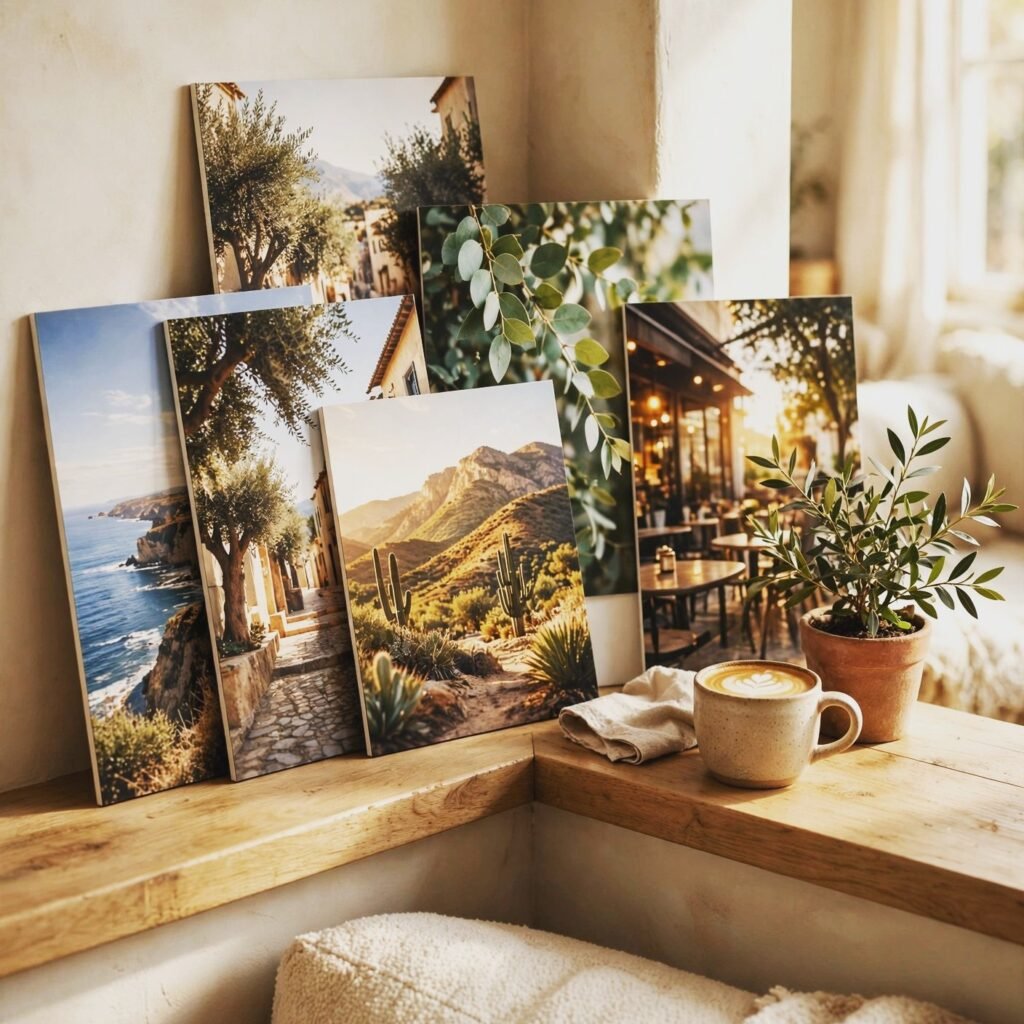
Gallery walls usually require a dozen nails, which is exactly why they are on every renter’s wish list. A leaning gallery solves it by letting you layer frames on a ledge, a console, a low bookshelf or even the floor, so the arrangement looks collected and you can rearrange it whenever you want.
Start with the largest frame at the back and layer smaller ones in front, overlapping a little. Mix sizes and mix in a small object or two, like a candle or a bud vase, so it does not feel like a framed catalog. If you want true wall-hung art, use adhesive picture hanging strips rated for the weight of the frame, and always use the number of strips the package states for that frame size.
The trade-off is dust and pet risk, since floor level art gets bumped. I keep the heaviest frames on a console and the lighter ones on adhesive strips. Budget about $40 to $150 for a few frames and a ledge, and shop thrift stores for frames that you can spray paint to match.
4. Plug-In Wall Sconces Instead of Hardwired Ones
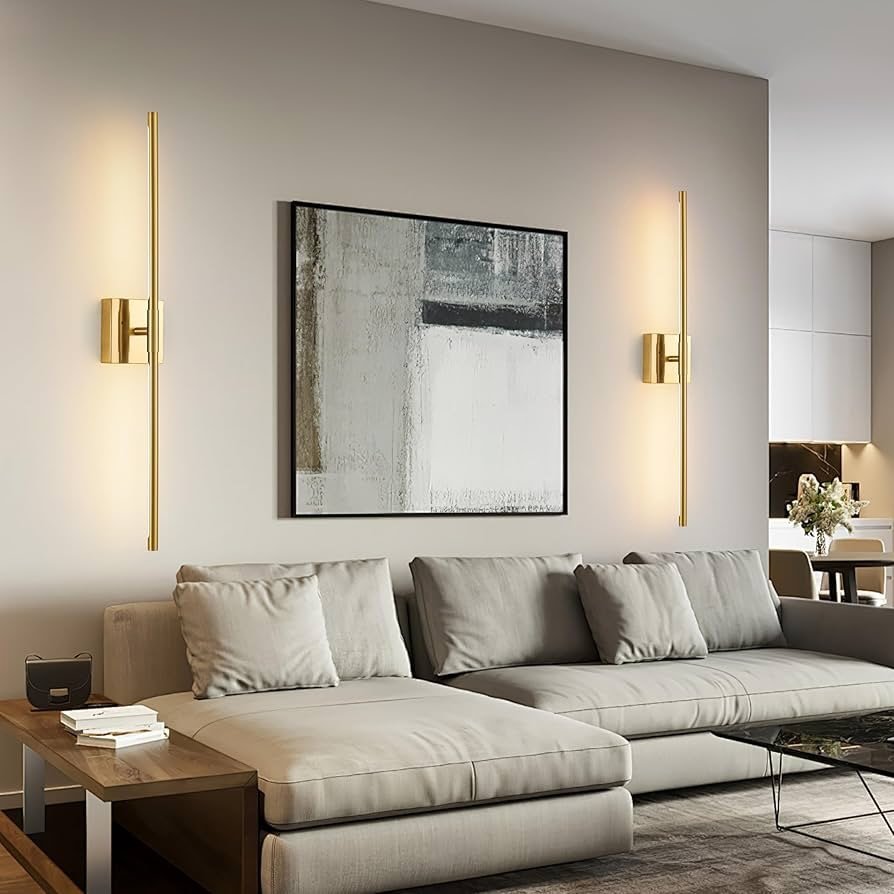
Overhead lights are the biggest reason rental living rooms feel flat. Plug-in sconces bring in warm, layered light without an electrician. They are one of the best-kept secrets in renter decor, and they are why I stopped hating my living room at night.
Choose a sconce with a long cord and a cord cover that can be painted to match the wall. Mount it with a damage-free adhesive method designed for lightweight fixtures, or set it on a shelf or ledge if your wall is not suitable for adhesive. Keep the cord tidy by running it behind furniture or tucking it into a cord channel.
Always check the product’s stated weight limit, and do not use adhesive for a heavy metal fixture. A lightweight sconce with a fabric shade is safer. Expect $25 to $80 each, and remember that you can remove the whole thing when you move and use it in the next place.
Pro tip: Choose bulbs in a warm white range. Cool white bulbs make even a beautiful living room feel like a pharmacy.
5. Layered Lamps and Smart Bulbs for Better Lighting

This is the cheapest high-impact idea on the list. A living room with one harsh ceiling light feels like a waiting room, but a floor lamp, a table lamp and a small accent lamp on a shelf turn it into a place you actually want to sit.
Aim for three light sources at different heights: something tall (a floor lamp), something mid-height (a table lamp), and something low (a small lamp on a console or bookshelf). Swap your bulbs for warm white, and consider smart bulbs if your landlord does not mind, since they let you dim the whole room from your phone without changing any fixtures.
One thing I wish someone had told me: keep the original ceiling bulbs in a labeled bag and swap them back at move-out if you changed any fixtures. Budget around $15 to $60 per lamp, and look at secondhand shops for good lamp bases that only need a new shade.
6. A Large Area Rug to Hide Ugly Flooring

Rental floors are often the least inspiring part of the room: worn carpet, dull vinyl, or laminate with that slightly shiny look. A large rug covers it, defines the seating area, and softens echo, and it does all of this with zero damage.
Size matters more than pattern. A rug that is too small makes the room feel chopped up. As a rule, the front legs of your sofa and chairs should sit on the rug. In a small living room, that usually means a five by eight or an eight by ten. Put a good rug pad underneath so it does not slide and so it protects the floor.
| Rug material | Best for | Rough price | Trade-off |
|---|---|---|---|
| Flatweave cotton or polyester | Budget buyers, pet owners | $60 to $200 | Thin, so it needs a thick pad |
| Jute or sisal | Natural look, high-traffic areas | $100 to $350 | Scratchy underfoot, hard to clean |
| Washable rug | Pets, kids, spills | $150 to $400 | Lighter weight, may shift without a pad |
| Wool or wool blend | Long-term investment | $300 and up | Heavy to move and sheds at first |
One warning from experience: some rubber-backed rug pads can react with vinyl flooring and leave a stain or discoloration. Look for a pad labeled as safe for vinyl and hardwood, and lift a corner after a few weeks to check.
7. Floor to Ceiling Curtains on a Tension Rod
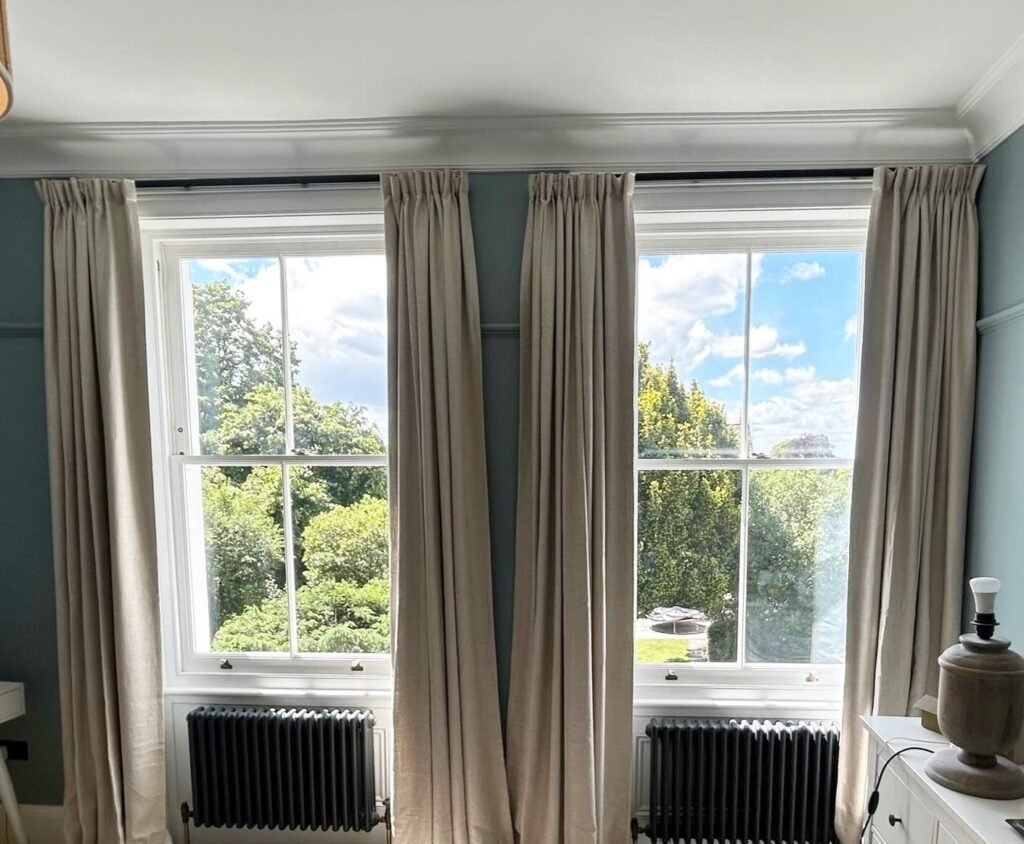
Rental windows tend to come with tired mini blinds and a lot of wasted wall. Hanging curtains high and wide makes the whole room look taller, and a tension rod means you do not have to drill into the frame. It is a small change with a surprisingly large effect.
Choose a heavy-duty tension rod rated for the curtain weight, and put it as close to the ceiling as the window frame allows. Hang the curtains so they just kiss the floor. For a more tailored look, use clip rings or a wide pocket so the fabric falls evenly. Linen blends and cotton hang nicely and cost much less than velvet.
The trade-off is weight and window width. A tension rod works best for windows under about five feet wide and for lightweight to medium curtains. For bigger windows, try a freestanding curtain rod stand that sits on the floor, or hang curtains with command-style hooks along the top of the frame if the paint allows. Pad the ends of the rod with felt so it does not scuff the trim.
8. Freestanding Bookcases Instead of Floating Shelves
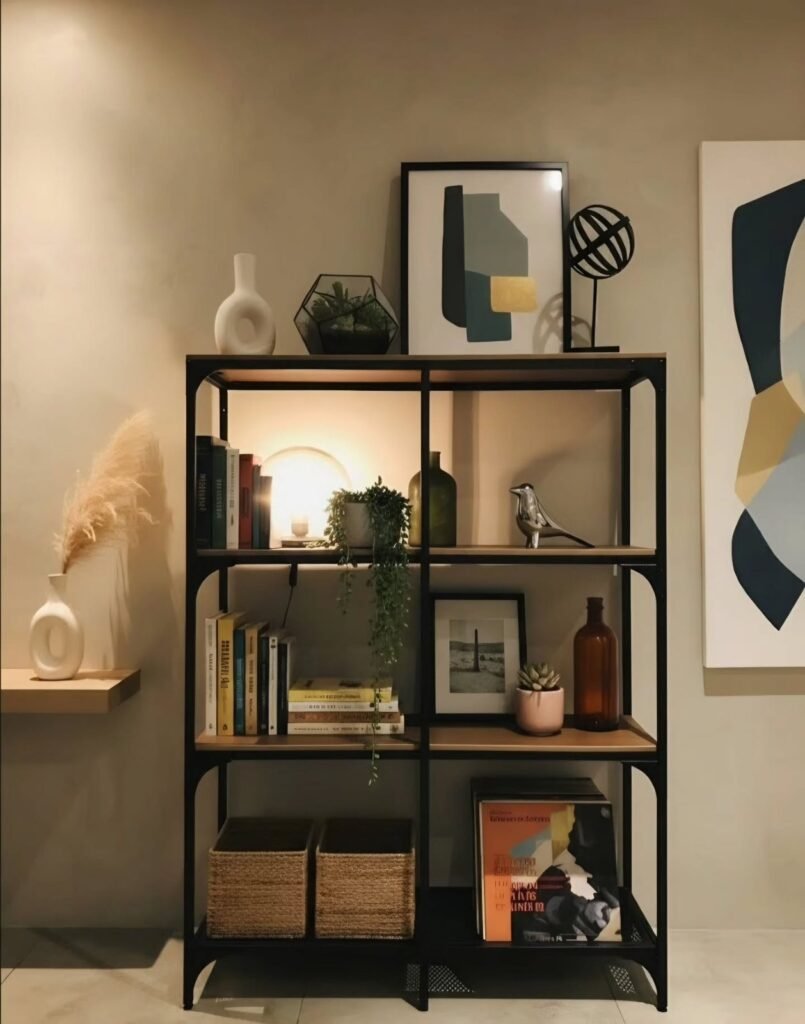
Floating shelves are probably the most requested thing renters want and cannot have. A freestanding bookcase gives you the same display space, plus storage, without a single wall anchor. The only catch is tipping safety, which I will get to in a second.
Pick a bookcase that is slightly shorter than your ceiling and place it where it can be balanced against a wall. Style it in thirds: one third books, one third objects, one third empty space. Use baskets on lower shelves to hide visual clutter, and a few plants or ceramic pieces on top to make it look intentional.
On tipping: tall furniture can be dangerous, and most manufacturers recommend anchoring it to the wall. In a rental, ask your landlord about a small anchor. If that is not allowed, choose a low, wide bookcase with a heavy base, and keep heavy items on the lowest shelves. Expect $70 to $300 depending on material, and look secondhand for solid wood pieces.
Pro tip: Check the shelf depth before you buy. Many cheap bookcases are only about ten inches deep, which cannot hold large books or baskets. Aim for twelve to fourteen inches if you want real storage.
9. A TV Stand and Cord Management Instead of Wall Mounting

A wall-mounted TV looks clean, but mounting one means big holes, and most leases say no. A good TV stand or media console gives you the same tidy look, plus storage for the clutter that normally lives on top of the TV.
Choose a stand wide enough that the TV sits comfortably inside the edges. Use cord clips or a cable sleeve to gather wires into one bundle, and tuck the bundle behind the stand. Paint-matching cord channels that attach with adhesive can hide the rest, but test them on the wall first, since some leave residue.
If you want the TV to look less like a black rectangle, hang an art frame TV skin or use a decorative object on the console to draw the eye elsewhere. Budget about $80 to $350 for a solid console. If you are in a tiny space, a narrow console behind the sofa can double as a drop zone and a lamp base.
10. Swap Outlet Covers, Switch Plates and Cabinet Hardware (and Keep the Originals)
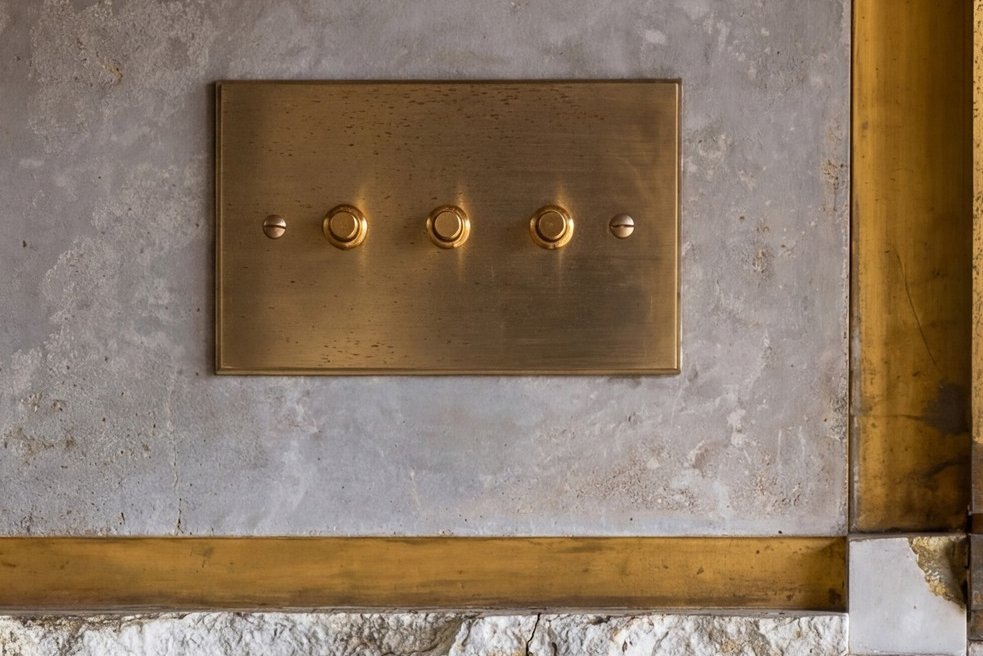
This is one of those small swaps that makes a rental feel less rental. Builder-grade switch plates yellow with age, and swapping them for clean white, brushed brass or matte black ones is a ten minute job that costs less than lunch.
Use a screwdriver, label a bag with the room name, and keep every original plate and knob inside. When you move out, put the originals back. If your landlord is relaxed about it, you can also swap built-in cabinet or shelf knobs the same way. Just be careful about screw length so you do not damage the threads.
If you are not comfortable working near outlets, turn off the breaker for that room first. Most plate swaps do not touch live wiring, but it is a good habit. A set of eight to ten plates usually costs $15 to $40.
11. Slipcovers, Throws and Layered Textiles
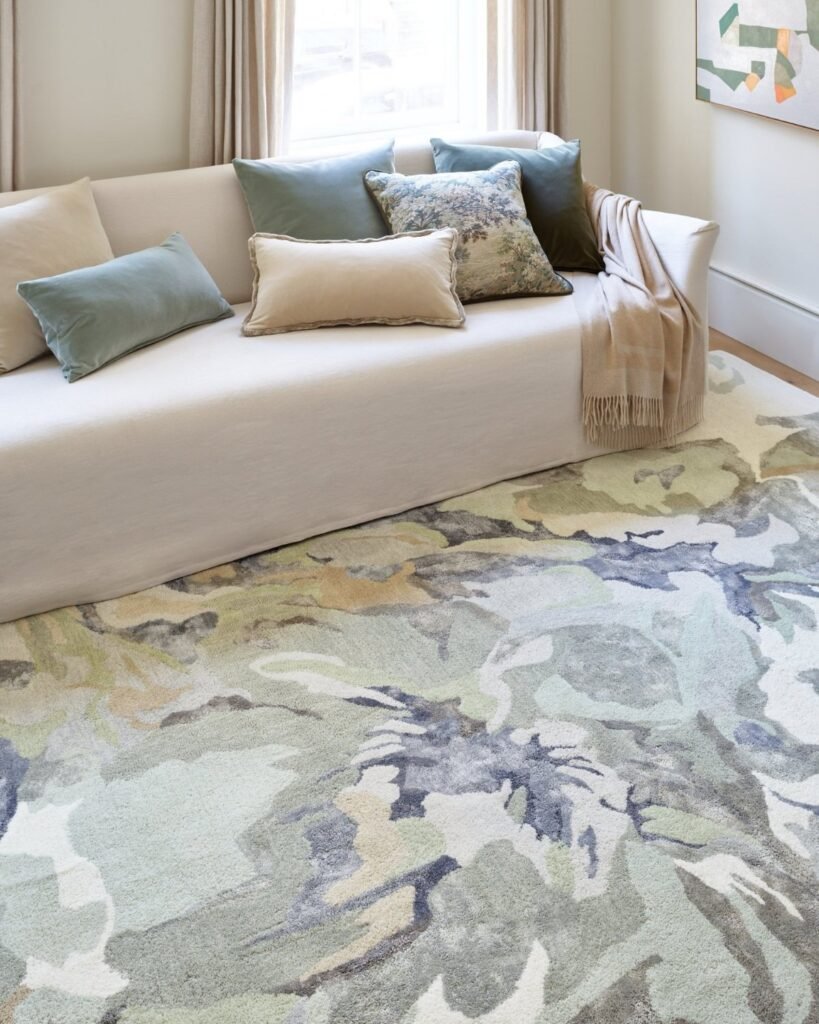
Textiles are the heart of renter friendly decorating. A good slipcover can turn a hand-me-down sofa into the main character, and layered throws and pillows do a surprising amount of work for very little money.
Start with the sofa. If it is dated or stained, a fitted slipcover in a neutral linen look gives it a clean base. Then layer: one large pillow in each corner, two smaller ones in a contrasting texture, and a throw that you can fold over the arm. Stick to two or three colors so it looks styled rather than scattered.
For a reader named Marisol, the biggest upgrade was not the pillows but swapping a bright blue sofa cover for a warm oatmeal one. The whole room looked calmer in an afternoon. Look for a slipcover that matches your sofa model or has stretch, and wash it before you use it so it does not shrink in the first wash. Budget $60 to $200 for a good slipcover and $20 to $50 per pillow cover.
12. A Room Divider for Studio and Open Layout Living Rooms
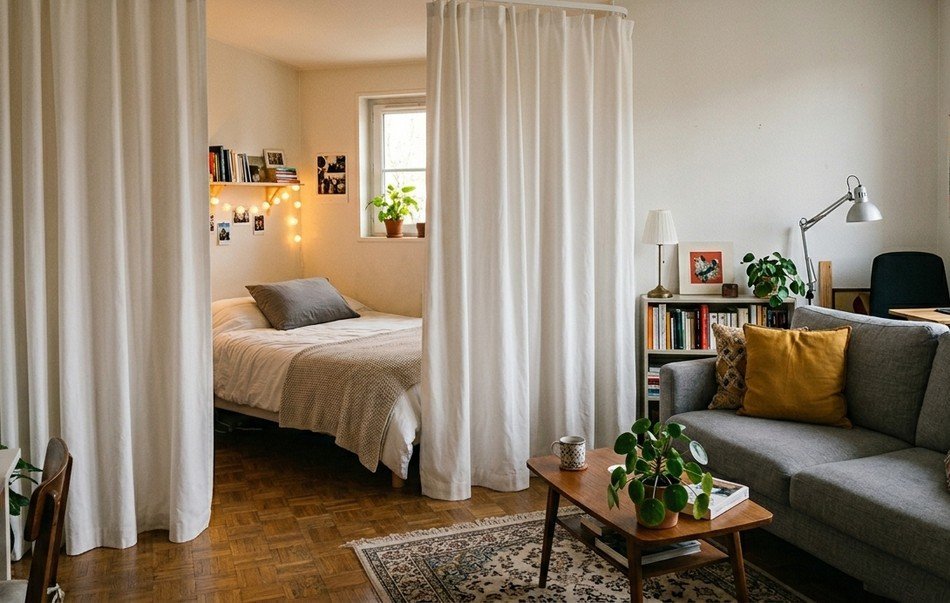
If your living room is also your bedroom or home office, a divider turns one big box into two zones without building a single wall. It is one of the most useful renter friendly living room ideas for studio apartments, and it also hides clutter.
The simplest option is an open bookcase placed perpendicular to the wall, which lets light through and gives you storage. A folding screen works for a softer look, and a curtain on a freestanding track or tension pole works when you want something lightweight that can be moved. Place it so it does not block the main walkway, and leave at least thirty inches of clearance.
| Divider type | Best for | Rough price | Trade-off |
|---|---|---|---|
| Open bookcase | Storage plus separation | $80 to $300 | Heavy and best placed against a wall at one end |
| Folding screen | Quick, flexible privacy | $50 to $200 | Flimsy cheap versions can topple |
| Curtain on a tension pole | Tight budgets, ceilings that allow it | $30 to $100 | Needs a ceiling and floor surface that can hold the pole |
| Large plants in a row | Soft, natural separation | $60 to $250 | Needs light and regular care |
13. Plants and Hanging Greenery Without Ceiling Hooks
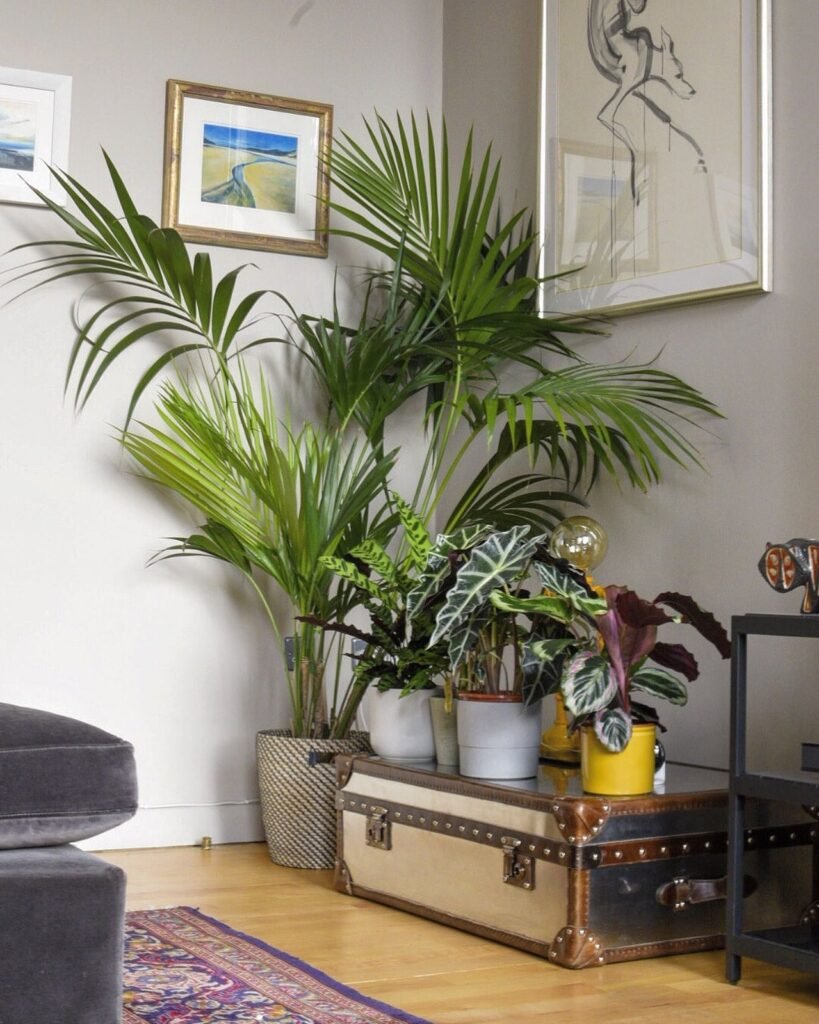
Plants make a rental living room feel lived in, and you do not need ceiling hooks to enjoy them. A tall plant in a corner, a trailing plant on a shelf, and a small cluster on a side table add height and softness in a way a poster never will.
Choose plants that match your light. A south-facing window can handle a fiddle leaf fig or a snake plant, while a dim corner needs something tougher like a pothos or a ZZ plant. Put saucers under every pot and a waterproof tray under anything on hardwood, because water rings are one of the most common deposit complaints I hear about.
If you want hanging plants, use a tension pole in a corner, a plant stand with a hanging arm, or a curtain rod you already have in the window. Plants are a fantastic budget upgrade too, since a healthy pothos in a basket runs about $15 to $30.
14. Make a Dated Fireplace or Builder-Grade Focal Point Look Intentional
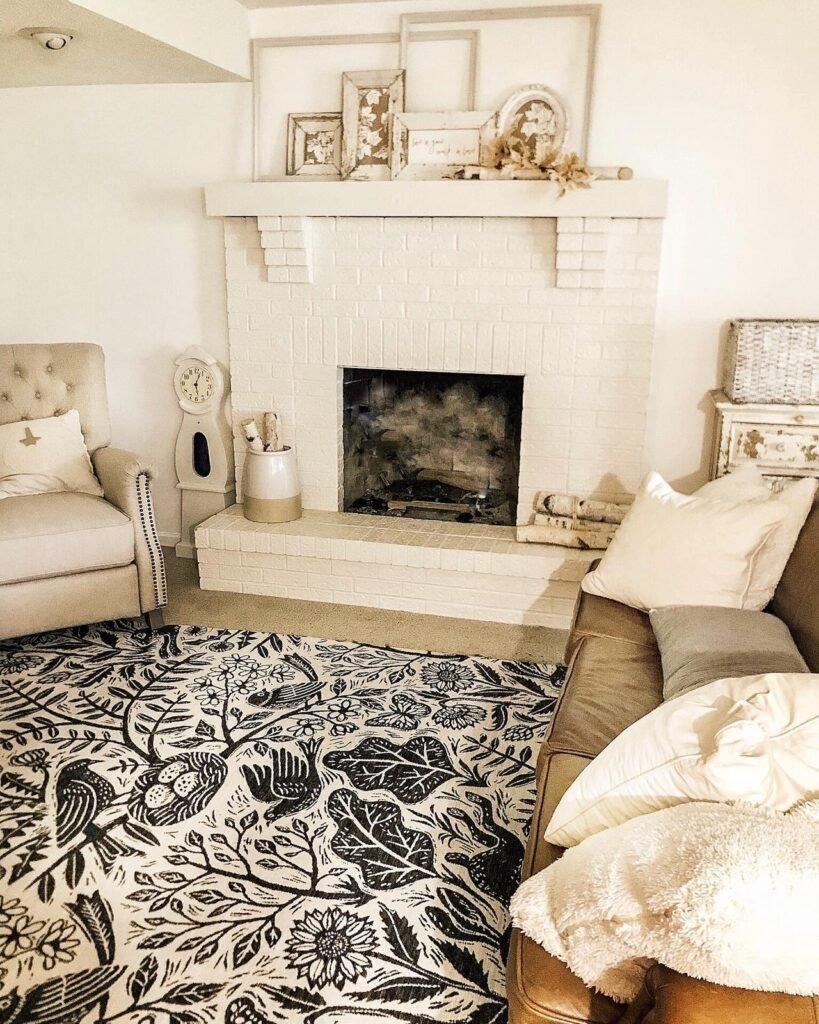
Some rentals come with a fireplace that has not worked for years, or a boxy built-in that looks like it was designed in a basement. You cannot paint it, but you can change how it reads, and you can do it without leaving a trace.
For a non-working fireplace, fill the opening with a stack of birch logs, a few pillar candles in glass holders or a large basket of blankets. Put a mirror or a large piece of art on the mantel and lean it rather than hanging it. A fireplace screen in black metal or woven material also hides a stained firebox cleanly.
Check first that the fireplace is truly not in use, and never put candles or flammable items in a fireplace that could be lit. If your lease allows a working fireplace, ask the landlord before using it at all. Costs vary, but a screen and a basket usually run $50 to $150.
15. Cover an Ugly Ceiling Light With a Clip-On Shade
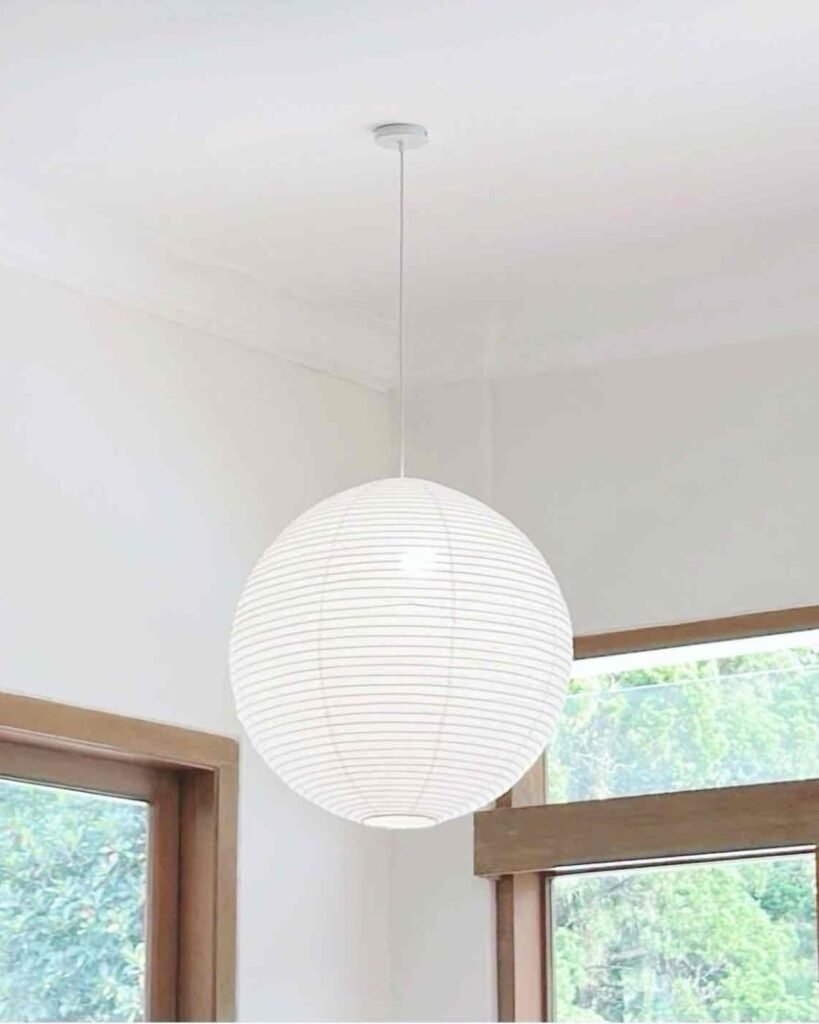
The flush-mount dome light in many rentals looks like it came from a parking garage. You can often fix it without changing the fixture at all, by covering it with a paper lantern shade or a fabric drum shade designed to clip on the bulb or the base.
Turn the light off and let it cool completely. Measure the fixture, then pick a shade that is slightly larger than the dome and rated for the bulb wattage. Use LED bulbs, since they stay cool and avoid heat build-up inside the shade. Keep the original cover in a labeled bag so you can put it back at move-out.
Some landlords do not like any change to ceiling fixtures, so check your lease or ask first. A clip-on shade usually costs $15 to $50, and if you use paper, choose a fire-rated option and keep it well away from heat.
16. A Statement Coffee Table, Ottoman and Styled Tray

When you cannot change the walls or the floor, furniture has to carry the style. A coffee table with real character, or a storage ottoman that doubles as seating, is one of the best investments for a renter because it moves with you.
Choose a table in a shape that fits your room. Round tables are friendlier in small spaces because there are no corners to bump. Style the top with a tray, a stack of two or three books, and one object. Leave at least a third of the surface empty so you have room for your coffee.
If you have kids or pets, an ottoman with a flat top and hidden storage inside gives you somewhere to put toys and throws without cluttering the room. Prices range from about $90 to $400. Secondhand marketplaces are a great place to find solid wood tables that can be refinished later if you own them.
17. Removable Window Film for Privacy and Softer Light

If your living room windows face a neighbor or a busy street, you need privacy without losing light. Static cling window film is the renter friendly answer, because it sticks with water instead of adhesive and peels off cleanly.
Measure the glass, cut the film slightly smaller than the pane, spray the glass with a mix of water and a drop of dish soap, and press the film on from the center out with a squeegee. Frosted and etched patterns give you privacy during the day while letting daylight through. At night you will still need curtains, since light from inside can make the film see-through.
Check the windows first. Double-pane windows with certain coatings can crack from heat trapped under dark film, so choose a light frosted style and check the manufacturer’s notes. A roll covers one or two windows for about $15 to $40.
18. A Tapestry or Woven Wall Hanging on a Tension Rod

When you want something on the wall but you do not trust adhesive on your paint, a tapestry or woven wall hanging attached to a lightweight rod gives you the look without the risk. It adds texture, color and warmth, and it can hide a bad wall entirely.
Slide the tapestry onto a slim rod or dowel, then hang it from a pair of adhesive hooks rated for the total weight. If the wall is not suitable for adhesive, hang it from a freestanding rack or lean it against the wall with the bottom resting on a low shelf. Macrame, woven cotton and printed fabric all work, and a larger piece reads as art rather than a dorm room accent.
One note from experience: sunlight fades fabric faster than you would think, so avoid hanging a favorite piece directly in a south window. Expect to pay $30 to $120. When you move out, you can wash it and roll it, which makes it one of the easiest decor items to travel with.
How Much Do Renter Friendly Living Room Ideas Cost?
Because most people want a plan before they open their wallet, here is how I would spend money at three levels. Prices change by store and season, so treat these as a planning guide, not a quote.
| Budget | What I would buy | What you get |
|---|---|---|
| Under $100 | Warm white bulbs, two lamps, curtains, a tension rod, pillow covers, a throw, window film | Better lighting, softer windows and a calmer sofa |
| $100 to $400 | Everything above plus a large rug, a leaning mirror, a freestanding bookcase and plants | A defined seating area, more storage and a real focal point |
| $400 to $1,000 | Everything above plus a slipcover, a statement coffee table, peel and stick wallpaper on one wall and plug-in sconces | A fully styled room that looks designed rather than rented |
If you can only spend on one thing, make it lighting and a rug. They change the feel of the room more than any art or accessory. If you are going to splurge, spend on the item you will keep for a decade, like a good sofa or a solid wood table, rather than items that only fit this particular apartment.
The Move-Out Plan: How to Take Everything Down Without Leaving a Mark
Most damage happens at move-out, when you are tired and rushing. Plan an afternoon for it and go in this order.
- Remove wallpaper panels first, peeling slowly from the top corner at a low angle.
- Take down adhesive hooks and strips by pulling the tab straight down along the wall, not outward.
- Warm any stubborn adhesive with a hair dryer for a few seconds before pulling again.
- Wipe leftover residue with a soft cloth and a little mild soap or rubbing alcohol, testing on a hidden spot first.
- Put back original switch plates, ceiling covers and bulbs.
- Photograph every wall, floor and window again so you have a before and after record.
Pro tip: If a spot of paint does come off, do not hide it and hope. Ask your landlord for the paint color and finish, touch it up carefully, and send a photo with a short note. In my experience, a small honest fix is almost always treated better than a surprise.
If I Were Starting Over, Here Is What I Would Do First
I would do the boring part first: read the lease, take photos and send that quick message to the landlord. Then I would swap the bulbs, add two lamps and buy a rug that is actually big enough. Those three changes cost less than a weekend away and they do more for a living room than any single piece of decor.
After that, I would pick one or two bigger ideas that fit my space, like a leaning mirror or a removable wallpaper wall, and stop. The best renter friendly living room ideas are not the ones that cram the most into the space, they are the ones you can live with now and pack up later without a second thought. Start small, test everything, and let the room tell you what it needs.
Frequently Asked Questions About Renter Friendly Living Room Ideas
What are the best renter friendly living room ideas on a tight budget?
Warm lighting, a large rug, and layered textiles give the biggest change for the lowest cost. Add a pair of curtains on a tension rod and a few plants, and you have transformed the room for under a couple of hundred dollars without touching a wall.
Is peel and stick wallpaper really safe for rental walls?
It depends on your paint. On smooth, well-cured satin or semi-gloss paint it usually comes off cleanly. On flat, cheap or freshly painted walls it can pull paint away. Always test a small piece in a hidden spot first and remove it slowly.
How do I hang art in a rental without making holes?
Use adhesive picture hanging strips rated for the weight of the frame, or lean larger pieces on a console, a ledge or the floor. For lightweight fabric pieces, a tension rod or a freestanding rack can work without touching the wall.
Can I use a tension rod for curtains in a living room?
Yes, for windows of moderate width and lightweight to medium curtains. Choose a heavy-duty rod, pad the ends with felt to protect the trim, and check that it holds before you hang the full curtain.
How do I make a small living room look bigger as a renter?
Use a large mirror, hang curtains high and wide, choose a rug that fits the whole seating area, and keep furniture on legs so you can see the floor underneath. A single, consistent color palette also helps the room feel less chopped up.
What can I do about ugly carpet or flooring in a rental?
Cover it with a large area rug and a good rug pad. Choose a pad safe for your floor type, and avoid pinning, gluing or taping anything to the floor itself.
Is it okay to swap light fixtures or switch plates in a rental?
Switch plates are generally easy and reversible if you keep the originals, but always check your lease or ask your landlord. For fixtures, stick to clip-on shades and bulb changes, and leave wiring changes to a licensed electrician with permission.
How do I get the landlord to say yes to my decor changes?
Ask in writing, describe exactly what you want to do and how it will be removed, and offer to restore everything at move-out. A short, specific request with before photos is far more likely to get a yes than a vague one.